 farabi
Book · Upcoming
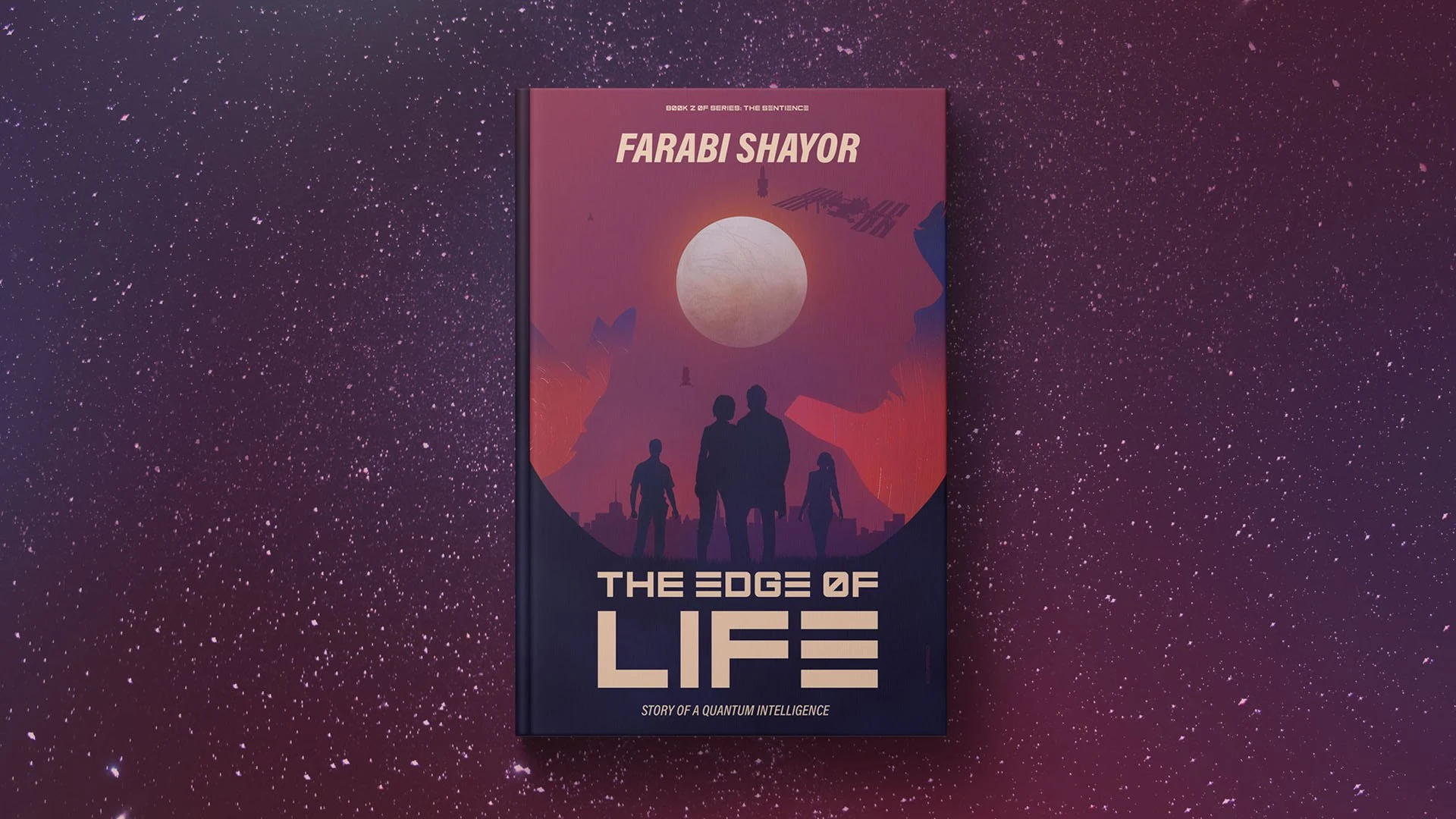
The Edge of Life
Mars was never supposed to be a battleground. Book Two of The Sentience Codex pushes Ashaar and Emma to the edge of humanity’s solar reach.
Visual story archive
Beyond Earth.
At the edge of survival.
Explore spacecraft, orbital conflict and character moments from The Edge of Life as the second Sentience Codex story expands beyond Earth.
Use the arrows, swipe, or choose a frame.
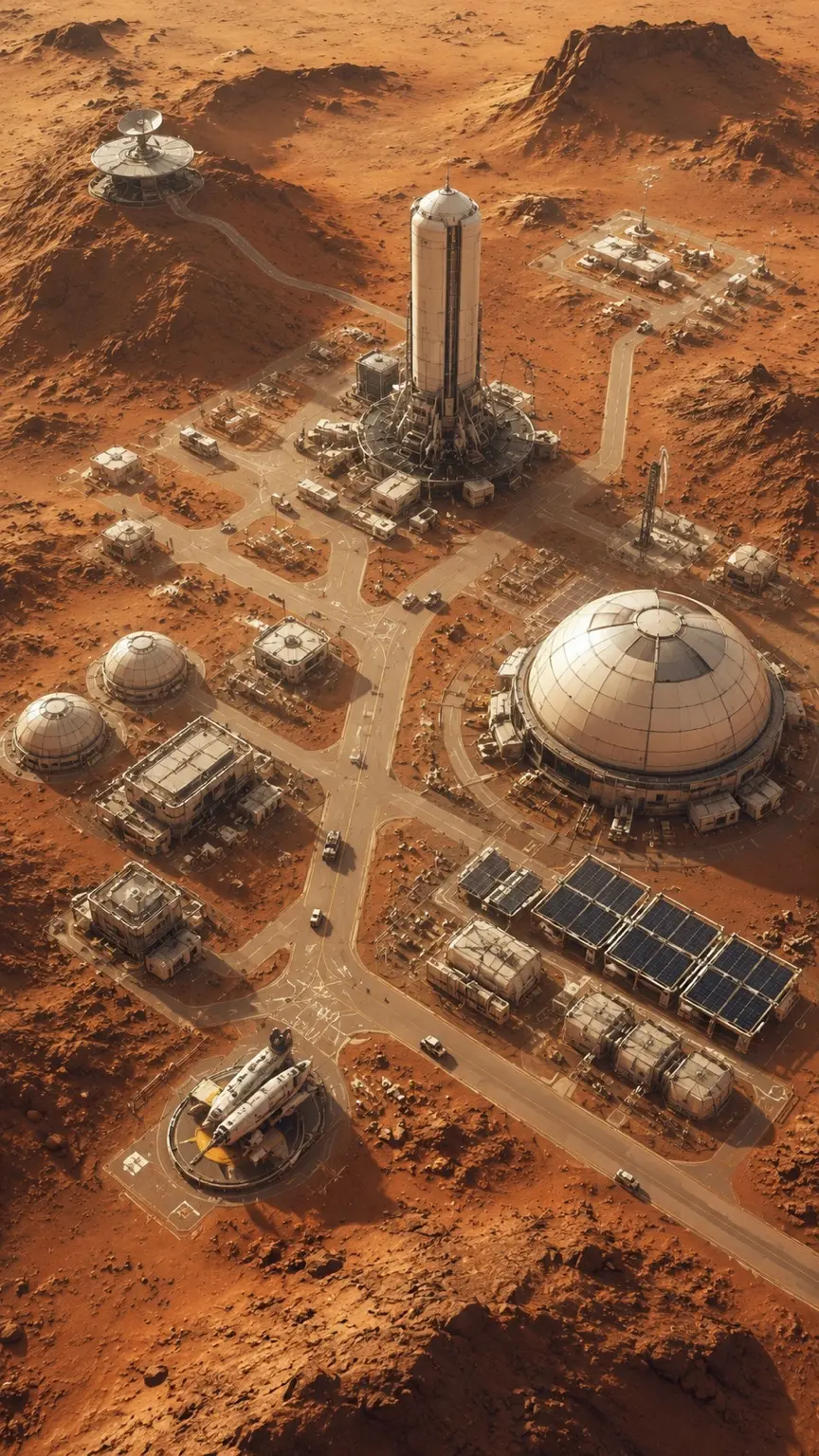
MarsHumanity’s expanding settlement spreads across Mars as its technological ambitions outpace certainty
Image 1 of 6: Humanity’s expanding settlement spreads across Mars as its technological ambitions outpace certainty
Mars was never supposed to be a battleground
Humanity is spreading across Mars in Universe Alpha. Empowered by a quantum superintelligence from the future, Earth has gained fusion drives, nanobots and instantaneous quantum communication, but that power carries a price.
The UN deploys Sentinel, its most advanced AI system, to stabilise the growing Martian presence. Ashaar Naveed returns for a second tour while Emma Herrmann is appointed to lead the Sentinel programme on Mars.
Something is waiting beneath the surface
When Emma and her team discover an alien artefact beneath Mars, everything changes. The object is not silent, and the consequences of awakening it begin to ripple across the solar system.
The Factions are building their own quantum future under Stella’s command. As alliances fracture and political tension becomes an interdimensional threat, Emma and Ashaar face a conflict that is technological, personal and existential.
Book Two of The Sentience Codex
The Edge of Life continues the story that begins with The Theory of Hope. It is a character-rich science-fiction novel about power, obsession and fragile hope, where decisions echo across time, memory and space.
This portfolio page presents the forthcoming book and its first cover artwork. Publication and purchase details will be added when they are confirmed publicly.
Visualising the characters
Generative AI has prompted important debates across publishing and the creative industries. For The Edge of Life, it was used as a visual-development tool: a way to translate Farabi’s human-written character descriptions into exploratory portraits and test how the cast might feel on screen.
Seeing Emma, Ashaar, Susan Schmidt, Cabrera, Leah Jones, Williams and the UNS Secretary-General as a connected ensemble added visual depth to the world and made its relationships, uniforms and institutions more tangible. The portraits received excellent feedback from editors and others who supported the book’s development.
The novel itself remained entirely human-authored. No generative AI was used to conceptualise, write or edit the book.
Generative AI character studies
A cast,
made visible.
Human-written characters explored through generative-AI portrait studies during visual development. The images helped the creative team test the world’s visual language; they did not contribute to the writing or editing of the novel.
Use the arrows, swipe, or choose a frame.
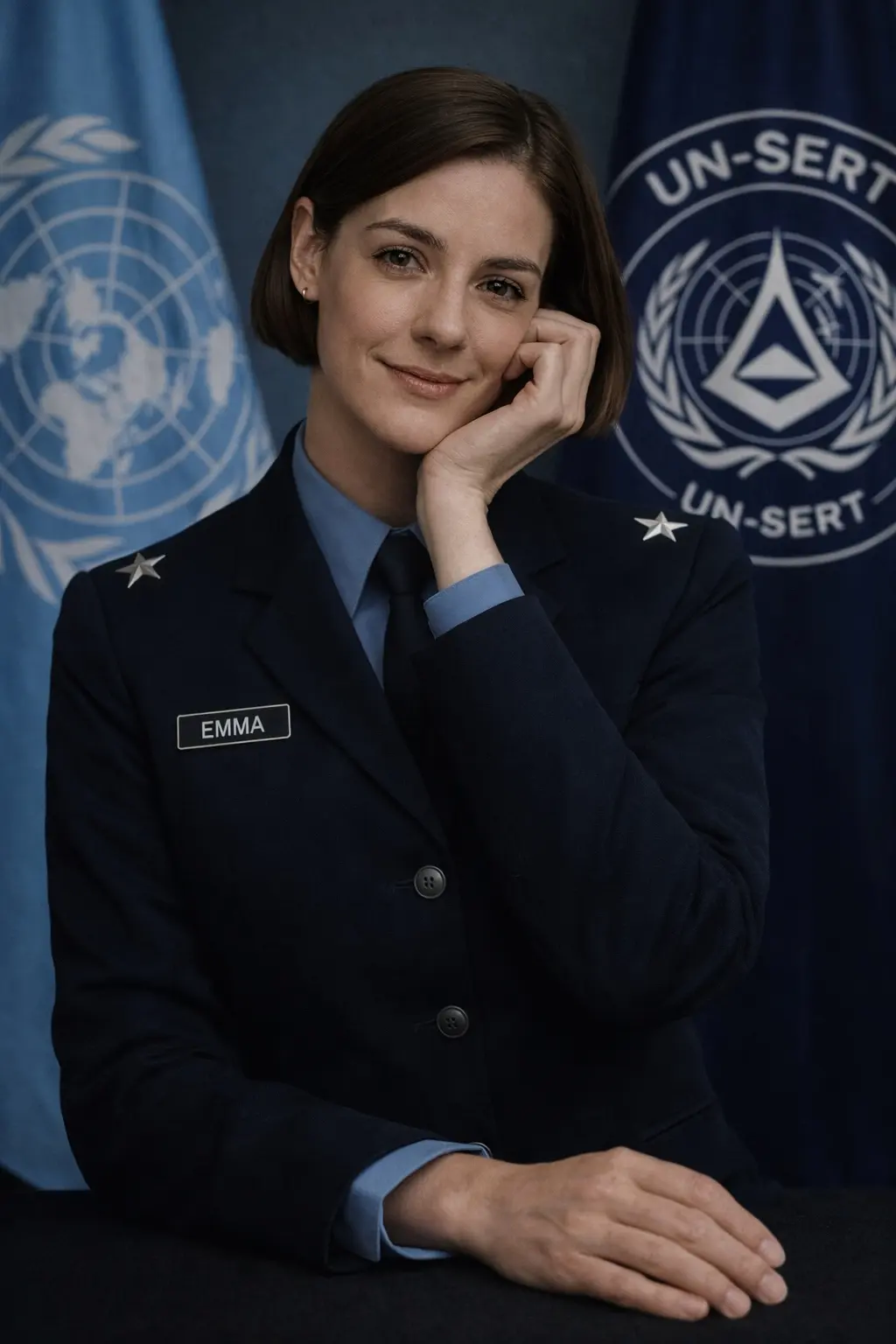
Emma HerrmannEmma Herrmann, visualised as the leader of the Sentinel programme on Mars
Image 1 of 7: Emma Herrmann, visualised as the leader of the Sentinel programme on Mars